


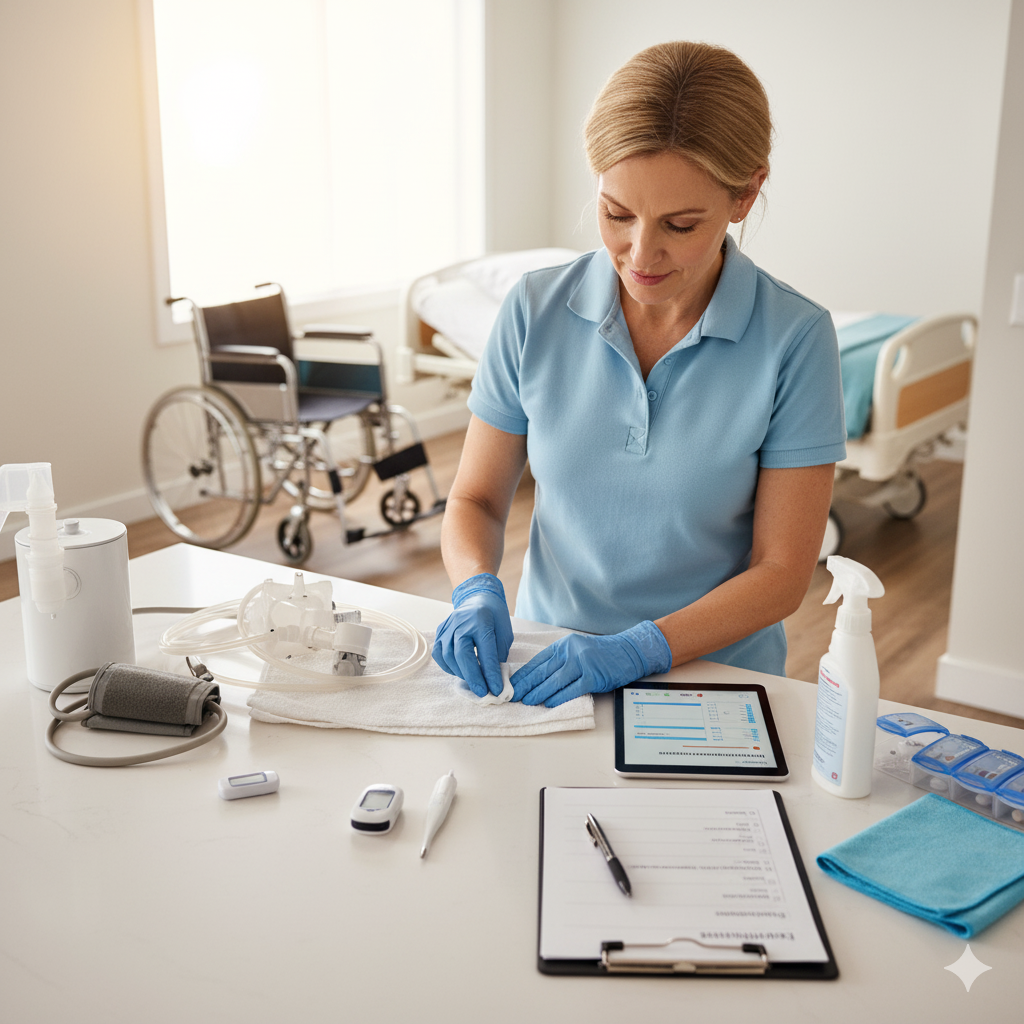
Caring for a loved one at home often means using medical equipment on a daily basis—nebulizers, oxygen monitors, wheelchairs, or even smart devices. While these tools make healthcare more accessible, they also require proper cleaning and maintenance to stay safe and effective.
Medical devices come into direct contact with the body, which means they can easily collect bacteria, dust, or medication residue. If not cleaned properly, they can:
For example, a nebulizer that isn’t cleaned after each use can harbor germs. To learn how to use one safely and effectively, check out our Beginner’s Guide on How to Use a Nebulizer Correctly.
While each device has its own care instructions, here are universal rules every caregiver should follow:
Smart devices such as connected oxygen monitors, digital thermometers, or smart nebulizers need special care. Here are tips:
To better understand how these tools are shaping the future of care, explore our blog on The Role of Smart Medical Devices in Home Healthcare.
Cleaning can extend the life of medical devices, but parts eventually wear out. Look for:
Replacing these parts on time ensures safety and performance.
Each item has its own cleaning schedule, but consistency is key.
Clean and well-maintained medical equipment is not just about extending the device’s lifespan—it’s about protecting your loved one’s health. A few minutes spent each day on cleaning can prevent infections, ensure reliable performance, and bring peace of mind.
Remember:
By following a structured cleaning and maintenance routine, you’ll make home healthcare safer, smoother, and stress-free.