


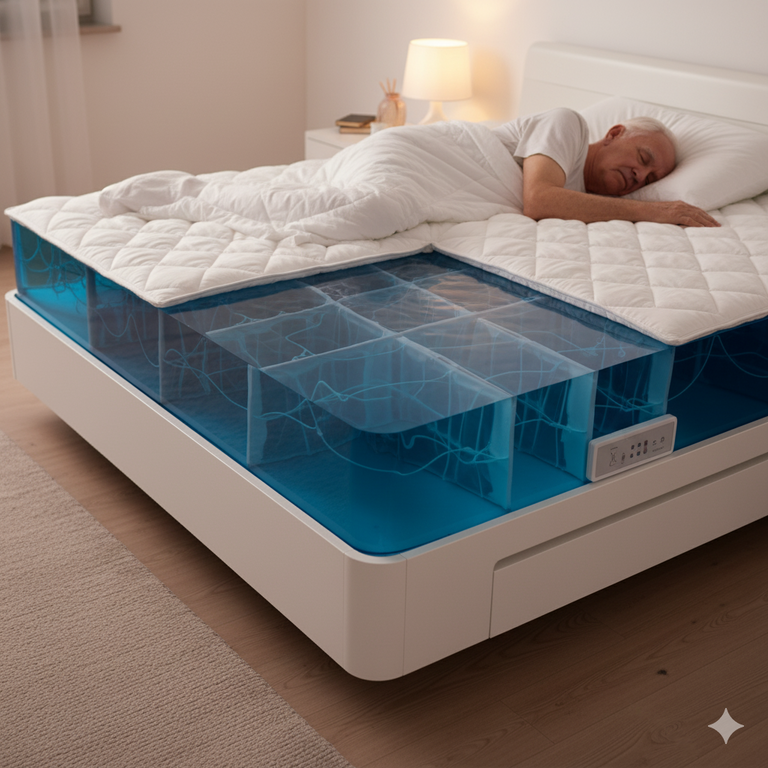
For individuals with limited mobility, extended periods of time spent in bed can lead to a serious and painful condition: pressure sores, also known as bedsores or decubitus ulcers. While traditional mattresses can create painful pressure points, the medical water bed offers a powerful solution. Beyond just comfort, these specialized beds harness the natural properties of water to provide unparalleled pressure redistribution, making them a cornerstone of modern patient care. This blog post will explore how a water bed works and why it is a game-changer for unlocking comfort and proactively preventing pressure sores.
Pressure sores occur when constant pressure on a specific part of the body restricts blood flow to the skin and underlying tissues. Over time, this lack of circulation causes the tissue to break down, leading to painful sores. Preventing this requires a mattress that can effectively redistribute the body’s weight, eliminating those high-pressure points.
This is where a medical water bed excels. The fluid within the mattress conforms perfectly to every curve and contour of the body. Unlike foam or spring mattresses that push back against the body, water supports it evenly. The body’s weight is spread out over a much larger surface area, dramatically lowering the pressure on any single point, such as the hips, tailbone, or heels. This crucial process of pressure redistribution is the fundamental reason medical water beds are so effective in preventing pressure sores.
While the primary medical benefit is pressure relief, a water bed also offers a level of comfort that can significantly improve a patient’s quality of life.
Not all water beds are the same. When considering a water bed as a piece of Durable Medical Equipment (DME), look for the following features:
Like any piece of DME, a water bed requires proper maintenance to perform optimally.
A water bed is far more than just a luxurious comfort item; it is a vital piece of Durable Medical Equipment (DME) designed to address a serious health concern. By offering superior pressure redistribution and a range of comfort benefits, it plays a key role in preventing pressure sores and ensuring a better quality of life for individuals with limited mobility. By understanding its benefits and choosing the right model, you can unlock a new level of comfort, health, and peace of mind.