


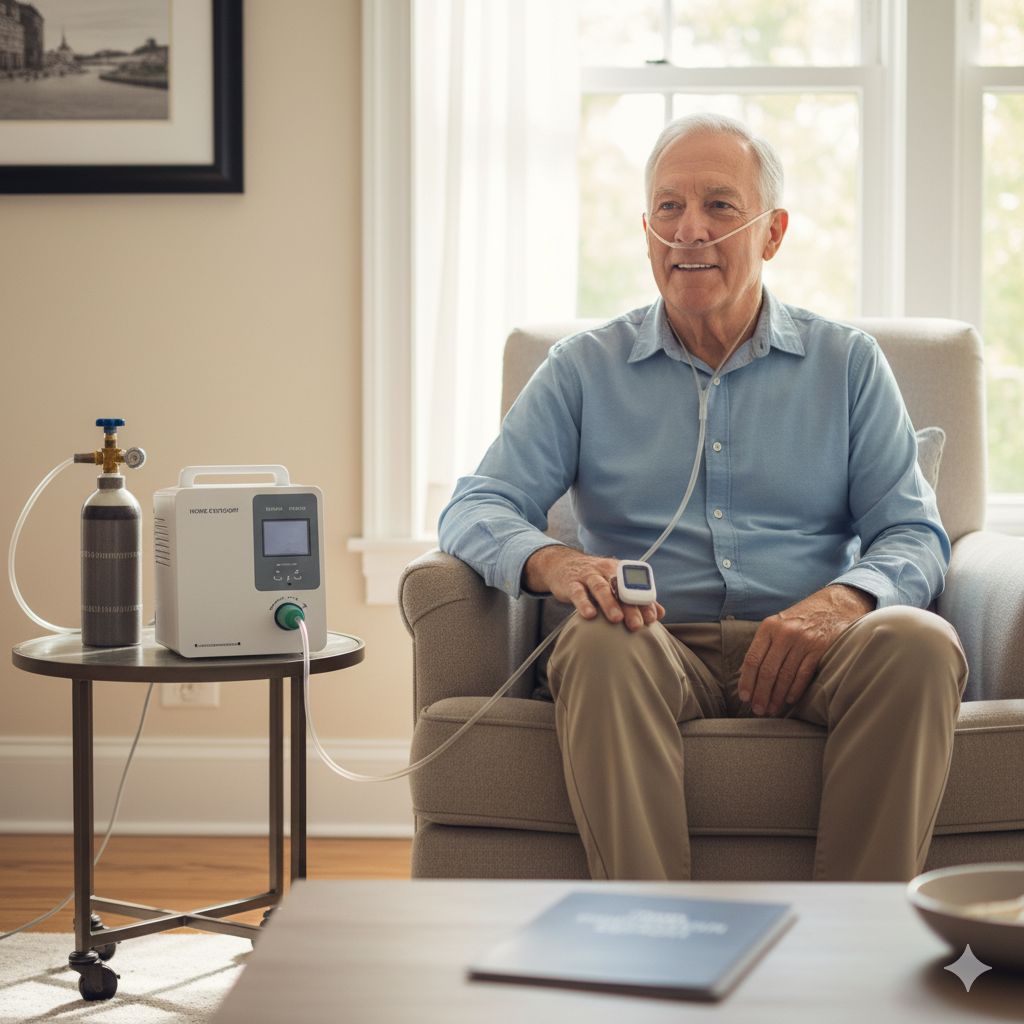
For many patients, recovery doesn’t stop when they leave the hospital—especially when breathing support is part of the journey. Home oxygen therapy can make a world of difference by improving energy, reducing strain on the heart, and helping your body heal faster.
If your doctor recommends oxygen support at home, here’s everything you need to know about choosing, using, and maintaining the right home oxygen support system safely.
If you’re preparing for discharge, make sure you check out our guide on Patient Discharge Checklist: Essential Home Recovery Equipment to plan your complete recovery setup.
Home oxygen therapy provides extra oxygen to people who have trouble maintaining adequate blood oxygen levels. It’s commonly used for:
Supplemental oxygen helps your body function better and prevents fatigue, confusion, or shortness of breath during recovery.
Choosing the right oxygen system depends on your doctor’s prescription and your mobility needs. Here are the most common options:
Oxygen Concentrator
This machine draws in room air and filters out nitrogen, delivering pure oxygen through a nasal cannula.
Portable Oxygen Concentrator (POC)
Lightweight and travel-friendly, POCs are perfect for patients who want mobility and independence.
Oxygen Cylinders
Cylinders contain compressed oxygen and are often used as backup for emergencies or short-term recovery.
Some patients may also need nebulizers to deliver medication directly to the lungs or humidifiers to add moisture to oxygen flow—especially if dryness causes discomfort.
Tip: Always clean nebulizer cups and tubing after every use to prevent infections.
A safe home setup ensures both comfort and peace of mind:
Pro Tip: Have backup power or extra cylinders ready in case of a power outage.
Use a pulse oximeter to track your oxygen saturation (SpO₂) regularly.
Keeping a daily log helps your doctor adjust flow rates if needed.
Just like any medical equipment, regular maintenance ensures safety and performance:
Cleanliness and upkeep can extend your equipment’s lifespan and prevent breathing issues.
If oxygen therapy is temporary, renting a concentrator or cylinder may be cost-effective. For long-term needs, purchasing your own unit can offer more convenience.
Still unsure? Our Patient Discharge Checklist blog covers detailed tips on rent vs. buy decisions for home care equipment.
Home oxygen support systems are life-enhancing tools that bring hospital-quality care into your home. When used correctly, they can help you recover comfortably, maintain your independence, and breathe better every day.
Remember—a well-prepared home is a healing home.
Serving New York, Queens, Long Island, Brooklyn, Bronx, and Westchester with reliable medical supplies and durable healthcare equipment.